Tile & Waterproofing
Tile is the finish. Waterproofing is what keeps it there.
Grout and most tile are not waterproof on their own. Behind a well-built shower is a continuous system — a membrane or a traditional mortar-bed pan with liner — that directs water to the drain and keeps it out of the framing.
When you compare estimates, ask each contractor to name the waterproofing method they plan to use and how they test it. A clear answer to that question tells you a lot.
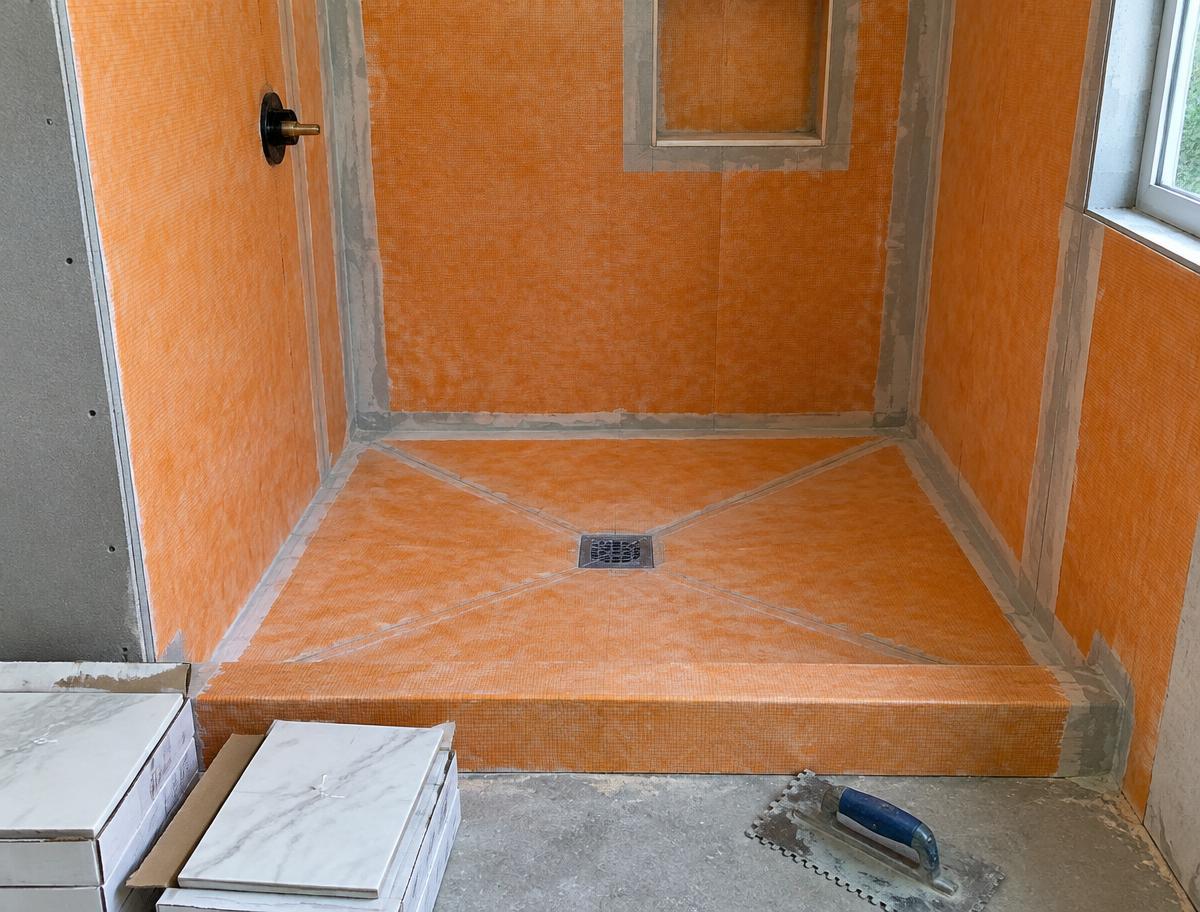
Illustration only, not a completed project.
Common approaches
Sheet membranes, liquid-applied membranes and traditional mortar-bed pans can all work when installed according to manufacturer instructions. What matters is continuity at seams, corners, niches and the drain connection.
Flood testing
Many installers flood-test a shower pan before tiling: plug the drain, fill with water and check for leaks over a period of time. Ask whether it's part of the plan.
Choosing tile you'll live with
Porcelain is dense and durable; natural stone needs more care; handmade-look tile adds variation and often wider grout joints. Floor tile should be suitable for wet areas and offer reasonable slip resistance.
Common questions
- Is epoxy grout better?
- It resists stains and moisture well but is less forgiving to install. Many good showers use high-quality cement-based or urethane grouts. Ask what the installer is comfortable with.
Ready to talk through your bathroom?
Share a few details and we'll try to connect you with an independent remodeling professional, subject to availability.