Full Bathroom Remodeling
Full bathroom remodeling, planned around the room you actually have
A full remodel usually means removing finishes down to the studs or subfloor, correcting what's behind them, and rebuilding with new plumbing fixtures, tile, lighting and ventilation. It is the right call when several systems are tired at once, or when the layout itself is the problem.
If you're weighing it, start by deciding whether fixtures stay where they are. That single choice shapes cost, permits and schedule more than any tile selection. Tell us about the room and we'll try to connect you with an independent professional who can look at it in person.
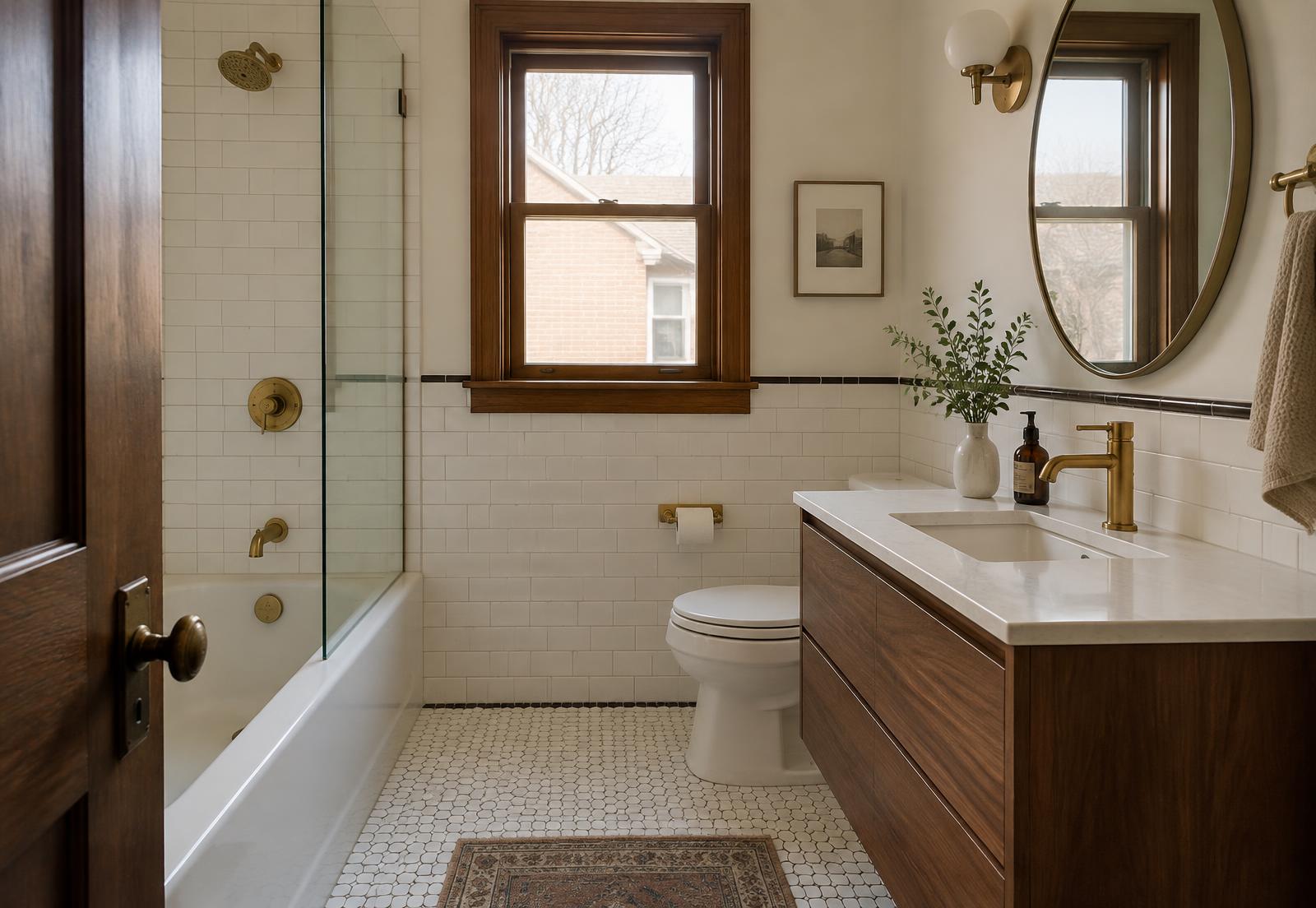
Illustration only, not a completed project.
Keeping the layout vs. moving fixtures
Replacing a toilet, tub or vanity in place reuses existing drain and supply locations. Moving them means opening floors or walls, rerouting drains with proper slope and venting, and often more involved permitting. In older brick homes and multi-unit buildings, the path of the main stack can make some moves impractical — a contractor should confirm this before you fall in love with a floor plan.
What's behind the walls matters
Older Chicago homes can have galvanized supply lines, cast iron drains, plaster over lath, or past repairs of mixed quality. None of that is unusual, but it's why a responsible estimate often includes an allowance for conditions discovered at demolition. Ask how an estimate handles surprises before you sign.
Ventilation and electrical are part of the remodel
A properly sized exhaust fan ducted to the exterior, GFCI-protected outlets and adequate lighting are easy to overlook while choosing finishes. They are also the items most likely to involve permits and licensed trades.
Common questions
- How long does a full bathroom remodel take?
- It depends on scope, permit timing and material lead times. A same-layout remodel is typically shorter than one that moves plumbing. A contractor should give you a written schedule after seeing the space.
- Do I need a permit?
- Often, yes, when plumbing, electrical or walls change. Purely cosmetic work may be treated differently. Scope determines what's required; a properly licensed professional should confirm the approvals your project needs.
Ready to talk through your bathroom?
Share a few details and we'll try to connect you with an independent remodeling professional, subject to availability.